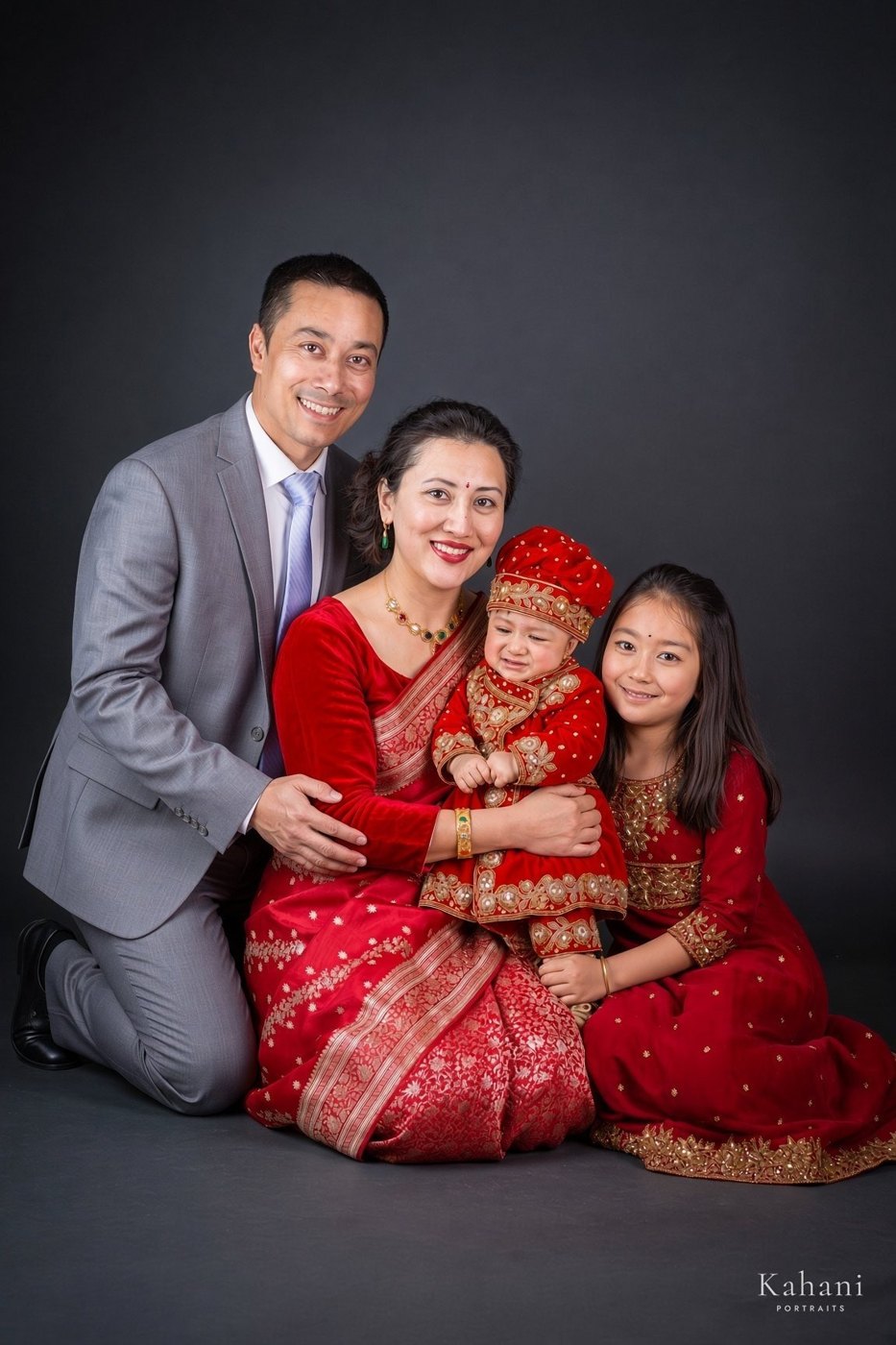
The first-rice ceremony goes by many names. Pasni in Nepali families, Annaprashan in much of India, Mukhe Bhaat in Bengal, Choroonu in Kerala. The shape is shared: a baby, usually at five or six months, is fed solid food for the first time by the elders, surrounded by the whole family. It lasts an afternoon and the baby will be grown before you know it, so the photographs carry a lot. Here is how to make them good.
The moments that matter
- Dressing the baby. The first outfit, the kajal, the cap or tika. This happens before guests arrive and is often the calmest, most intimate part of the day.
- The arrival of the elders. Grandparents greeting the baby, aunts taking turns. These unposed minutes are where the laughter is.
- The blessing and the first spoon. The heart of the day. We photograph the feeder's face, the baby's reaction, and the ring of family watching, in that order, within a few seconds.
- The plate. The kheer, the fruits, the arrangement on the thali. Families spend hours on it; it deserves a photograph before it's disturbed.
- Choosing the objects. In many families the baby is offered a pen, money, a book, rice and jewellery, and whichever is grabbed first predicts a future. Everyone leans in. It's the best candid of the day.
- The family portraits. Whole family first, while everyone is present and tidy, then each branch, then the three of you alone.
Light, and why the time of day matters
Most ceremonies happen in a living room, a temple hall or a banquet venue. Living rooms are easiest if the feeding happens near a window during daylight; we'll suggest moving the seat a metre if it helps. Halls are darker and we bring light, kept soft so the photographs still look natural. If you have any say over timing, mid-morning or early afternoon gives the best natural light; evening ceremonies are fine, just lit by us.
A timeline that works
- Photographer arrives 45 minutes before guests, photographs the baby being dressed, the plate, the room and the decorations.
- Guests arrive; candid coverage for half an hour.
- The ceremony itself, usually 20 to 40 minutes.
- Family portraits straight after, before anyone changes or leaves. Fifteen minutes is enough with a plan.
- The meal and the rest of the gathering, photographed loosely.
What to prepare
- A second outfit for the baby, because the first will meet kheer.
- A short list of the group portraits you want, with names. We'll run it.
- A quiet room for feeding and naps, which also makes a lovely spot for a portrait of the three of you.
- If the ceremony is at a venue, the name of the person to ask about lights and where we can stand.
How we photograph ceremonies
Our Milestone & Ceremony collection covers up to three hours, with the formal portraits and the candid moments, a hundred or more edited photographs, and a same-week sneak peek to send to family abroad. We've photographed Pasni and Annaprashan across New Jersey and New York, from living rooms in Edison and Jersey City to halls in Queens, and we know the order of the day well enough to be in the right place before it happens.